
The Hells
An ethereal realm and home to demons. Damned souls are brought to the hells either via contract or by being collected in the veil. Comprised of nine layers, each representing a cardinal sin, the hells keep souls trapped—refusing to enter them into the rebirth cycle. Instead, they spend eternity pandering to the pleasure of their captors, either through service or continued torture.
In the hells, souls are used as currency. They’re feasted upon—destroying the soul’s essence—and used to leverage better contract terms.
Demons and the god of death himself find no challenge in tempting and damning the souls considered easily corruptible. (e.g., those already guilty of grave sin in the living realm.) Instead, they find the greatest entertainment and achievement in damning virtuous ones.
Unlike the heavens, more is known about the hells due to pervasive demonic influence in the living realm, necromancers, and hellish creatures sharing what they know.
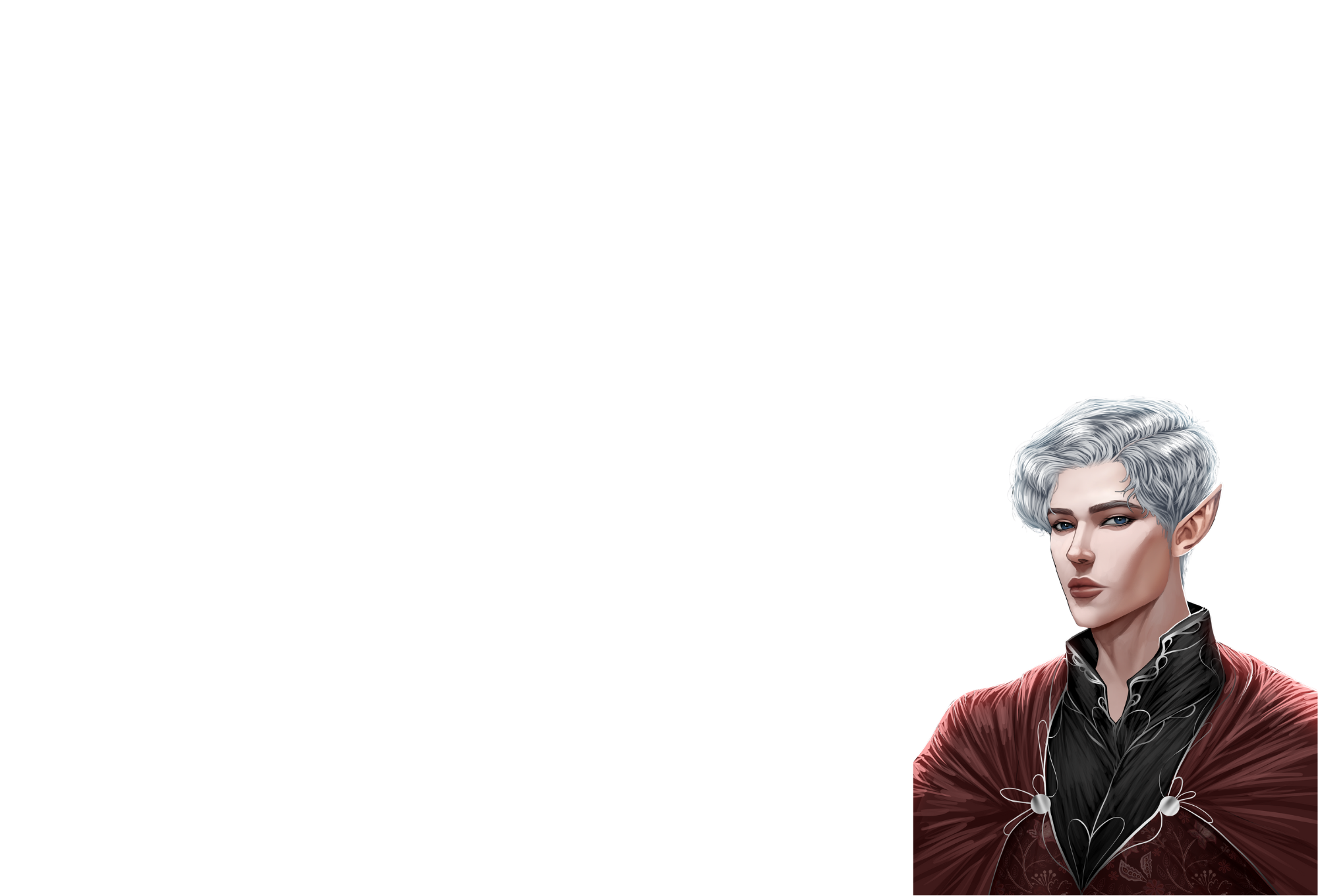
Presiding God: The God of Death
The god of death rules the hells. Manipulative and cruel, he is destined to be the eternal antagonistic force upon the realms. Without death there is no rebirth.
The Heir of the Hells
Netharis’ son, Vaelyn, is ruthless, cunning, and unafraid of leveraging all angles to ensure he achieves his goals. Often called Netharis’ shadow by demons, Vaelyn is as twisted, manipulative, and calculating as his father. In true demon fashion, Vaelyn only cares for himself.
The Tower
A central point piercing each of the hellish layers, the Tower is home to the hells’ most notorious and powerful Houses. Netharis keeps tight reign on which demons are given access to certain parts of the Tower, and those found trespassing risk ejection or decimation of their entire House.
Netharis’ study can be found on the upper most layer, the throne room on the lowest. Many of the lower layers run rampant with Unhoused demons attempting to hide from Patriarchs or the god of death himself. The lower layers is also where a roaming black market can be found, offering trinkets, tomes, and contracts not otherwise permissible to own.
Much of the Tower is comprised of House layers. Houses who have earned the god of death’s favor are given residence and invitation to participate in hellish society and its twisted court.
Death Bringers
Netharis’ hybrid children serve the hells and his House in a role known as Death Bringers. They retrieve damned souls from the veil, contest claims made by Life Bringers, and shepherd souls in the hells. Necromancers and veilwalkers encounter Death Bringers far more often than Life Bringers.
In the court of the hells, Death Bringers are revered by demons. As the only members of Netharis’ House, they’re viewed as an extension of him. This results in demons vying for the attention of Death Bringers nearly as often as the god of death’s.
Bozzal
Carran
Erlanis
Ethel
Galvath
Hadrha
Penticia
Rynn
Saiara
Vaelyn
Vestaris
Ylara
Zalris
The Layers &
Their Lords
Each layer of the hells is ruled by an overseeing archdemon and each layer becomes home to a certain type of damned soul.
-
Layer Lord: Geroth
A sub-realm of the hells filled with damned souls who have exemplified great amounts of deception or exploitation. Like much of the rest of the hells, the Layer of Fraud is a barren, craggy wasteland. -
Layer Lord: Xarzenos
A sub-realm of the hells filled with damned souls who have exemplified habitual overindulgence or overconsumption.
The terrain is filled with fruit and nut-bearing trees and shrubs. Apples, oranges, berries, and more. Upon being picked, they become rotten. -
Layer Lord: Vargellen
A sub-realm of the hells filled with damned souls who have exemplified significant and intense selfishness. -
Layer Lord: Rellen
A sub-realm of the hells filled with damned souls who have exemplified profound disbelief in or of the pantheon. -
Layer Lord: Miiphirys
A sub-realm of the hells filled with damned souls who have demonstrated profoundly little control in their sexual proclivity throughout their lives. Souls here often become the playthings of the rest of the realm. -
Layer Lord: Kelmod
The layer of the hells brushing against the veil. All souls who manage to find their way into the hells, venture through purgatory.
The majority of souls left in damnation can be found here.
-
Layer Lord: Drault
One of the deepest layers of the hells, unlike the other sub-realms, Treachery is not a hellfire ridden nightmare. Instead, it’s a barren and frozen wasteland.
Filled with damned souls who have exemplified numerous forms of deception, manipulation, and exploitation.
-
Layer Lord: Arzak
A sub-realm of the hells in which damned souls exemplifying persistent violent behavior (oft done for enjoyment) are brought.
One of the god of death’s most trusted archdemons.
-
Layer Lord: Kassil
A sub-realm of the hells in which damned souls who have lived a life filled with the undeniable need to punish others for their transgressions or mistakes reside.
One of the god of death’s most trusted archdemons.
Demonic House Structure
Different from Cerwiden Houses, demonic Houses exist to propel the Patriarch and earn the favor of the god of death.
Ranks
-
The demon presiding over the House. If the Patriarch falls, the House is dismantled.
-
Chosen by the Patriarch, a First General commands the Generals of a House and is the Patriarch’s closest ally.
-
If a House has earned or been granted residency within the Tower, the Patriarch is permitted to have twenty-six Generals. Otherwise, they’re permitted thirteen.
Generals are chosen by the First General with the approval of the Patriarch.
-
Demons chosen as a partner, husband, or wife to the House Patriarch.
Often used as a weapon or bait depending on the needs of the Patriarch. -
Demons who have collected at least 500 noteworthy contracts.
-
Demons who have completed contract negotiations and are finally given permission to offer contracts in the name of their House.
The bulk of a House’s power and reach lies here. -
Demons who have completed combat training and begin learning contract negotiation. Cannot offer contracts yet, but no longer used as servants.
-
Demons given the permission to begin combat training. Cannot offer contracts. Still used as servants.
-
Newest House members with little to no permissions. Cannot offer contracts, primarily used as servants.
Creating a Demonic House
In order for a demonic House to be created, it must be proposed to the god of death and supported by at least three Layer Lords. Nearly all House proposals are accepted as long as the following are true:
the proposing demon has not angered the god of death recently;
the proposing demon is willing to sign a contract with one of the supporting Layer Lords. The Layer Lord chosen will determine where the House resides and it’s general purpose. (e.g., if Miiphirys, the Lord of Lust, supports the proposal and the proposing demon accepts the contract offer, the proposing demon’s House will serve him and reside in the Layer of Lust); and
there is at least one Unhoused demon willing to be the new House’s First General.
It is rare for more than four Layer Lords to support a House proposal.
Once a House has been created, it must be established. A demonic House isn’t considered established until it earns residency in the Tower. This can happen at any time by earning the god of death’s favor.
Creatures of the Hells
Filled with damned souls, countless abominations, and various species of demons, the hells are home to some of The Four Realms’ greatest atrocities. The term demon is the umbrella term used to refer to all species originating from the hells.
-
Demons bestowed immense power and influence by the god of death.
-
Mortal souls destined to spend eternity in the hells. Tortured, abused, and hunted for sport, the souls are kept from the cycle of rebirth for personal amusement, political gain, or punishment.
-
The half-breed children of Netharis. They serve as tools to further the hells’ conquest of the living realm.
Unlike greater demons, Death Bringers do not carry the typical physical markers of their bloodline. This makes it easier for them to walk among the living.
-
Massive, scaled beasts capable of breathing hellfire and taking flight.
Many of their parts are used in blood magic rituals, leading to their extinction in the living realm.
-
Demons with a mostly humanoid appearance.
Greater demons carry a combination of the following demonic physical traits: bat-like wings, ram or bull-like horns, red skin, and a barbed tail.
Compared to humans or the fae, demons are significantly larger in size with heights reaching up to thirteen feet.
-
Common lesser demon in the hells.
Scaled and lizard-like, these small demons are primarily used as servants or messengers.
-
Male greater demon with the oneiric voice or dreamwalking innate.
-
Demons who do not possess a humanoid appearance. These include nebeculai, imps, and familiars to name a few.
-
Nebecula (singular) are common lesser demons. They oft choose to take the form of fog to impede or stop movement of a soul, trapping them for other demons.
-
A nyraphim whose hatred for the hells has corrupted their essence. Cast out by Gaia, these once nyraphim creatures make for powerful demons with the inability to decipher ally from foe.
-
Contracted mortal souls placed into inanimate objects with the sole purpose of gathering information for their creator.
-
Female greater demon with the oneiric voice or dreamwalking innate.
-
Lesser demon commonly found in the hells. Tiny, sprite-like creatures who torture souls by whispering the atrocities that await them.
Hellish Holidays & Celebrations
Holidays, Celebrations, and Traditions of the hells are ruthless, bloody, and dark.
Strong caution is advised when reading through these descriptions.
-
Hells-wide tournament held during the week of Bloodhallow. Houses choose a champion and they’re pitted against one another until one remains.
The Abyssal Champion gains the god of death’s favor and a night with a Death Bringer of their choosing. -
Week-long debaucherous celebration in honor of the god of death. Demons feast and fuck alongside Layer Lords, and participate in, or spectate the Abyssal.
-
Three nights in which Layer Lords and their Generals slip into the living realm to impregnate a host. Cerwiden Houses in allegiance with the god of death choose which hosts to offer. Those who are Unhoused or not in allegiance with the god of death are not safe.
For the impregnation to take, the host must be in menses during the ritual. -
A week near the Autumnal Equinox in which Unhoused demons are hunted and forced to join a House or slaughtered.
-
A gluttonous feast held during the last night of the Dark Hunt. The House Patriarch who claimed or slaughtered the most Unhoused demons is crowed, earning prestige for the entire House. If the House is new, they are given residence within the Tower.
The House Patriarch is also given the opportunity to make one request of the god of dead and rarely does the god of death refuse. -
Celebration in which House Patriarchs are given the opportunity to choose a new House Consort.
Demons vying for the chance to become a House Consort wear a vial of their blood around their neck. If chosen, a House Patriarch will take the vial and drink the blood, binding them for one year. -
One night in which demons flood the veil to collect as many errant souls as possible. Led by Death Bringers, demons storm the streets of cities, towns, and villages while remaining under the cover of the veil.
Known as The Reckoning to nyraphim.
Contracts
All creatures with demonic blood are capable of offering contracts, but not all are given the permission. Demons must earn the appropriate status within their House before they’re trusted to collect worthwhile contracts.
Terms of each contract are unique with a few “standard practice” clauses known among certain species of demon. All contracts, regardless of the demon (e.g., succubi, incubi, archdemon, etc.) are upheld by blood magic. If either party breaches the agreed upon terms, a blood price will be extracted from the offending party—usually resulting in death.
As a result, demons utilize many loopholes in their own system, employing vague or duplicitous language, hidden clauses, or simply postpone delivering their portion of the agreement in favor of waiting for their contracted to die.
Netharis is the only demon known to deliver on every contract he’s offered.
Contracts are viewed as form of currency in the hells. They can be traded among demons, or offered like coin or gold.